

Smart Ring Battery Life: What Buyers Should Check
A smart ring has little room for a battery. That sounds obvious, but it changes the way a buyer should review the product. A watch can accommodate a larger cell and a visible charging reminder. A ring must balance size, comfort, charging contact design, Bluetooth operation and the sensor schedule in a much smaller body. Battery life is therefore not a single number to collect from a sales sheet. It is something to test against the way the ring will actually be worn and used.
Read capacity together with the operating claim
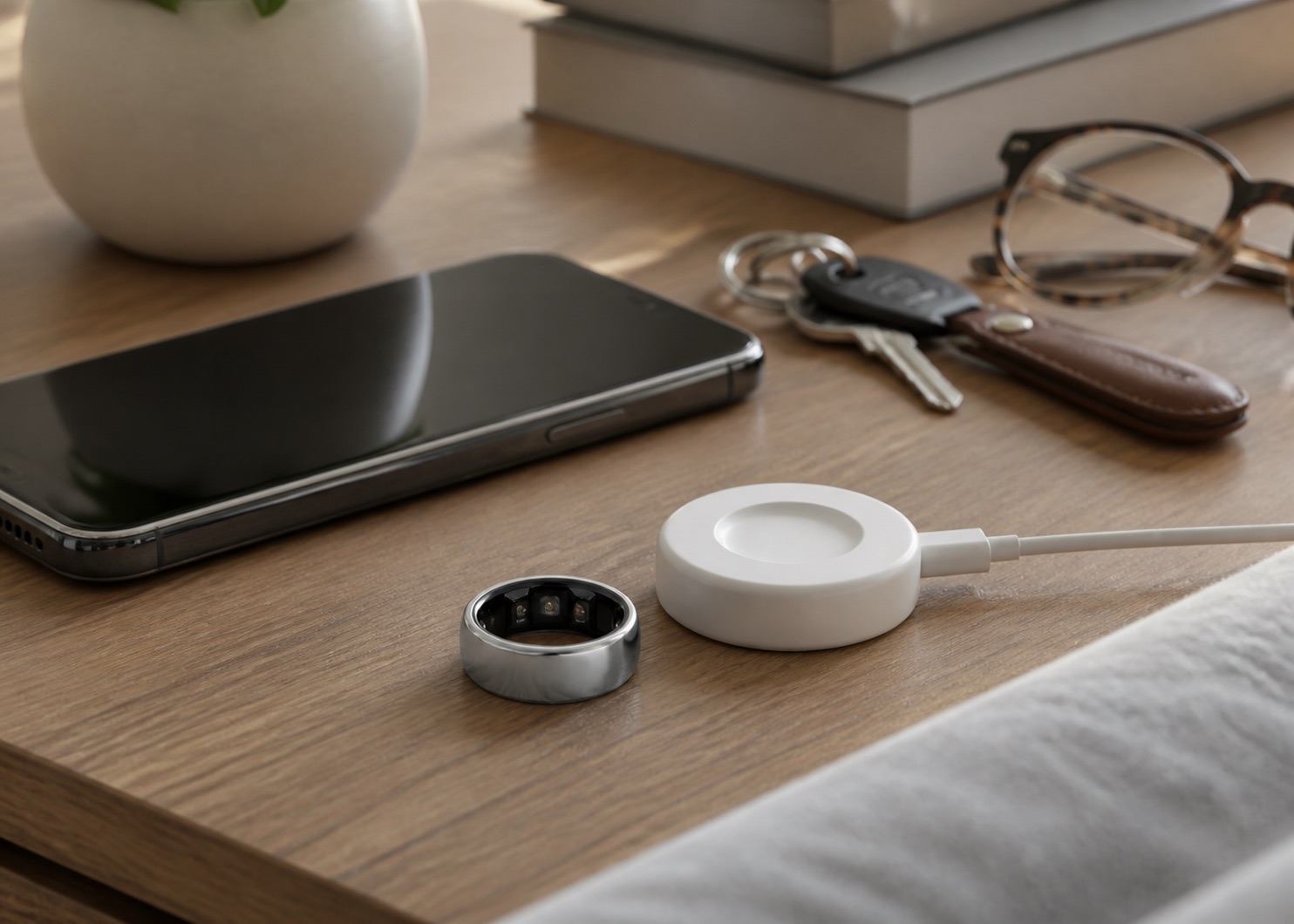
The Well Fitness JQ007 ring specifications list a 40mAh battery, Bluetooth 5.1 low-power connection and stated operation of five to seven days, with fifteen to twenty days of standby. Those figures provide a starting point for evaluating a sample, not a guarantee for every finished project. A ring that frequently synchronizes activity records, uses LED effects or activates optional functions can draw power differently from a ring left mostly in standby. Phone settings and reconnection behavior can also affect the experience because the app and the ring must communicate.
A buyer should ask what "use" meant in the battery test. Was the ring paired continuously? Which tracking features were active? How frequently was the app opened? Were lighting or remote photo controls used? At what point was the device considered empty? If the final branded product enables different functions or gives different instructions, its battery wording should be checked again. A modest, repeatable description is more useful than a prominent number customers cannot reproduce.
Charging experience matters as much as capacity
People remove a ring to charge it, so the charger becomes part of the product experience. During sample review, check whether the ring seats securely on the charger, whether its contacts line up without fiddling, and whether charging status is easy to understand. A ring that lasts several days can still feel inconvenient if customers regularly discover that it was placed incorrectly on the charging base. Packaging should include the correct charger and plain instructions on drying and cleaning the contacts before charging.
This point is especially relevant for a wearable promoted for everyday use. A product may list IP68 protection, but a water-resistance designation is not an invitation to charge a damp device or expose charging contacts to residue. The final instructions should state the conditions confirmed for the product and tell users to keep charging surfaces clean and dry. Care guidance protects the product experience without pretending that ordinary wear is the same as an unlimited water-use claim.
Test the app and connection pattern
Smart ring battery evaluation should not take place with the companion app ignored. JQ007-related product information identifies Efitness or Fitnessmax companion app use depending on the selected product presentation, along with tracking for steps, sleep, activity, heart rate and blood oxygen. For an ODM or OEM program, the intended app route and enabled features must be settled for the final product. Test pairing on the supported phone versions, synchronization after the app has not been opened for a while, reconnection after charging, and the effect of any features the buyer plans to advertise.
Notification settings and phone background behavior can also change what customers report as battery trouble. If a phone repeatedly drops a connection or blocks background operation, a user may repeatedly open the app and reconnect. That is an app guidance and support issue as well as a battery issue. A good manual tells the customer how to pair, what permissions are needed, how to charge and what ordinary operating time depends on. The existing manual collection is a useful place to connect this instruction once the final model and app have been confirmed.
Do not turn wellness readings into medical promises
Ring battery and sensor discussions often drift into claims about monitoring. The JQ007 product material describes heart rate, blood oxygen, sleep, step and exercise information for everyday review. Those features can help users look at routine activity trends. They do not turn the ring into a clinical monitor, emergency warning device or tool for treatment decisions. Sensor frequency may also influence power consumption, which is another reason to describe both battery conditions and wellness functions carefully.
This distinction is useful for buyers as well as end users. It keeps packaging and app copy within what a consumer product can reasonably explain. It also avoids a situation in which stronger-sounding health claims cause customers to expect continuous clinical performance from a small rechargeable ring. If a user has a health concern, the product instruction should direct them to appropriate professional care and certified equipment rather than a wearable reading.
Review more than one charge cycle
A new sample is often checked immediately after it arrives and charges successfully once. That is useful, but it is not enough for the operating story customers will see. Use the ring for several normal charge cycles with the intended app and functions enabled. Note when it is charged, when it is worn, whether sleep recording is used, how often information is synchronized and whether the wearer needed to reseat the charger. This does not require a laboratory claim; it provides a grounded record of how the selected configuration behaves in everyday handling.
Also review what happens when the routine is imperfect. Users may leave the ring off its charger for a day, open the app less often than expected or try to recharge after washing their hands. The instructions should cover those common moments: keep contacts dry, check correct seating, reconnect through the intended app procedure and contact support if ordinary charging no longer works. Useful battery guidance includes the behavior surrounding the number, not just the number itself.
What to put in a smart ring battery review
Record battery capacity, charger type, app route, enabled functions and the stated use and standby conditions.
Test ordinary wear across several charging cycles with the final feature configuration, not a demonstration mode.
Check charging alignment, status indication, cleaning and drying instructions, packaging fit and replacement support.
Confirm app pairing and reconnection behavior on the intended phone systems before releasing battery copy.
Keep health data descriptions limited to consumer wellness reference and activity review.
When samples are compared, keep the charger and app version identified with each ring. Two rings that look alike may create different customer experiences if their charger seating, enabled functions or app guidance differ. This small note makes later battery questions much easier to answer.
Battery wording should match daily use
Small wearables are judged in ordinary routines: a morning charge, a few app checks, sleep recording, a missed connection or a damp hand after washing. Battery documentation that acknowledges those conditions is more credible and more helpful than a single maximum number. For buyers evaluating a smart ring project, Well Fitness can help identify the product details, app questions and user instructions that should be confirmed before branding or production.
Contact Us